
Unfortunately, there are people in this world who lack the ability to truly know how extraordinary people with autism are in their own ways. This misunderstanding can cause individuals with autism to lose precious opportunities. With there being so many unkind remarks and untrue beliefs about the nature of the autism spectrum, I have selected my top four misconceptions:
1.) Don’t want friends
Most children and adults on the spectrum like to socialize. The issue is they often make mistakes because they don’t know how to socialize. Having social failures in the past can also make them feel shy. Just because they struggle with certain social cues does not mean they are unfriendly. Don’t forget, they are still learning, and will develop the skills from their therapy sessions.
- In fact, my long life best and closest friend does NOT have autism. When I went to sleep away camp in the Poconos, my social skills were improving constantly. It was not only because of the friends I made from all over the world, but also how I shared my story of having autism and how it made my interactions with them a lot easier. During those summers, I carried the lessons from my therapists and used their teachings to understand things that may not be said clearly. Overnight camping was the time for me to be who I was, growing into a fine young man, the only autistic camper in the cabin.




2.) Can’t Learn Anything
Knowing an autistic individual’s learning pace will make your job a lot easier to teach them well. Some learn slower and others learn faster. One method in assisting a person with special needs in processing information is knowing their own interests. For instance, I like sports, traveling, and movies. If someone were to speak to me using a phrase related to what I love, then it would be easier for me to reply with another sentence to the dialogue. Here are some good examples.
Unsarcastic Phrases:
Other person: I made plans travel to Europe for two weeks and it was cancelled. It was my first time at bat. A nasty curve ball was thrown at me.
Myself: I am very sorry that your first time going to the continent was cancelled. Don’t forget that that there will be another chance for you to make it.
Other Person: To get over this frustration, I went bowling and I am not good at it.
Myself: Would you like to go bowling with me someday?
Sarcastic Phrases:
Other person: Kobe Bryant Stinks.
Myself: Why does he have five rings?
Other Person: AH HA! I got you. You did not notice I was being sarcastic.
Myself: Oops. My bad.
3. Lack the ability to Empathize
People with autism feel things differently. They express themselves in ways that maybe hard to understand, and it takes time for them to notice your feelings. Many struggle with interpreting people’s expressions through verbal communication and body language. Some don’t make eye contact. Wanting an autistic person to detect your feelings plays a major role in direct communication. Expecting a person with learning challenges to read between the lines can make both sides muddled. Being direct all the time will make it easier for an autistic person to comprehend things because it is straightforward and they don’t have to follow uneven patterns. Two techniques in practicing this are:
- Demonstrating a facial expression that was shown to them on an index card. If you have pulled out a picture of the happy feeling and duplicate that facial feature exactly from that card you showed, then the autistic person will know how you are feeling.
- Taking one sentence at a time when practicing conversations verbally or non-verbally. If the autistic person says, “I like mathematics because there is one answer to every problem.” You can say, “I am not good at math and I enjoy classes that have more than one answer.” Slowly but surely, you are teaching them how to adapt to opinions.
4.) Can’t go anywhere in life
This is a very common mistake that is made by anyone in general. I highly recommend people to rethink their opinion when they say something doubtful. Autistic people have the determination and motivation to go anywhere they believe is best for them, no matter how different they are. I have one perfect example that demonstrates me exceeding expectations.
- The administrators at my school reviewed my learning progress after finishing elementary school. They told me and my parents that I would not graduate high school with a diploma. Instead of feeling deterred, I told them to regather their thoughts and give me a chance. They saw my determination and we shared ice cream at my graduation.
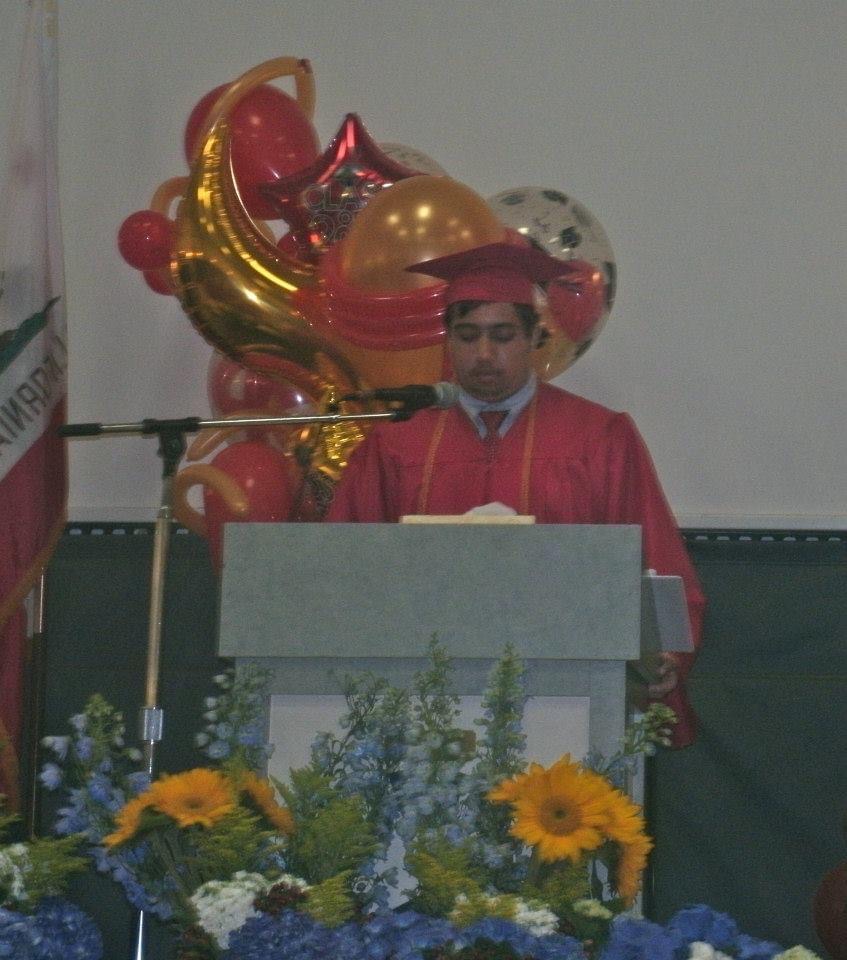
 David Sharif